Zero Impact: How Single and Double Zeros Flip Roulette's House Edge Equation
16 Apr 2026
Zero Impact: How Single and Double Zeros Flip Roulette's House Edge Equation
The Core of Roulette's Odds: Where Zeros Enter the Picture
Roulette wheels spin with precision, yet those green zero pockets single and double define the casino's built-in advantage, flipping the equation players face from the first bet; experts trace this back to the game's 18th-century origins in Europe, where Blaise Pascal's inventions laid the groundwork, but casinos quickly adapted zeros to tilt outcomes in their favor. Data from industry reports shows single-zero wheels dominate European floors, while double-zero versions prevail across American tables, each altering payout structures and long-term expectations in measurable ways.
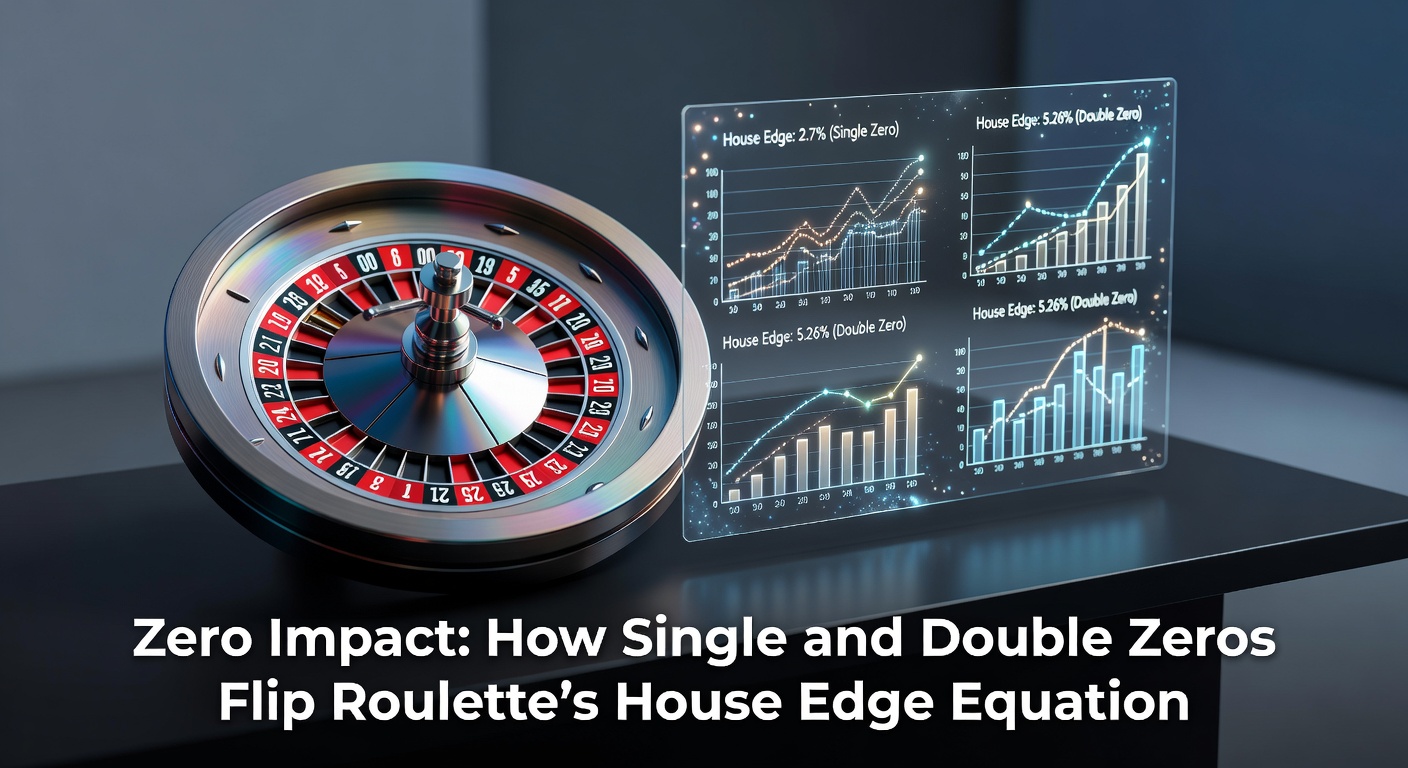
What's interesting here lies in the numbers: a standard 37-pocket single-zero wheel carries a house edge of 2.7 percent on most bets, whereas the 38-pocket double-zero jumps that to 5.26 percent, according to figures compiled by the Nevada Gaming Control Board, which tracks casino metrics statewide; players often overlook how this extra zero doesn't just add a pocket, but reshapes probabilities across reds, blacks, odds, evens, and beyond. Turns out, the zero's position near numbers one, two, and three clusters bets in ways that amplify edge effects over thousands of spins.
Single-Zero Wheels: Europe's Standard Equation
European roulette relies on a 37-number layout, with pockets zero through 36 arrayed in a signature pattern; this setup yields even-money bets like red or black at a true odds payout of 1:1, yet the house edge emerges because zero pays nothing on those wagers, creating a 1/37 disadvantage per spin. Researchers who've modeled millions of outcomes note that over extended play, this translates to casinos retaining about 2.7 percent of total amounts wagered, a figure consistent across physical and digital tables licensed in places like Malta.
But here's the thing: French variants layer on rules such as La Partage, where even-money losses on zero return half the stake, slashing the edge to 1.35 percent; observers point to data from the Malta Gaming Authority, which oversees many online platforms offering these, showing player preference for such wheels in session-long grinds. People who've crunched the math discover straight-up bets on single numbers carry a steeper 2.7 percent edge too, since payouts stay at 35:1 against true 36:1 odds, but the wheel's symmetry keeps variance lively.
And consider inside bets like splits or streets; they mirror the same edge percentage, while outside coverage bets absorb the zero hit most directly, prompting strategies that slice across sectors to hedge exposures.
Double-Zero Wheels: America's Edge Amplifier
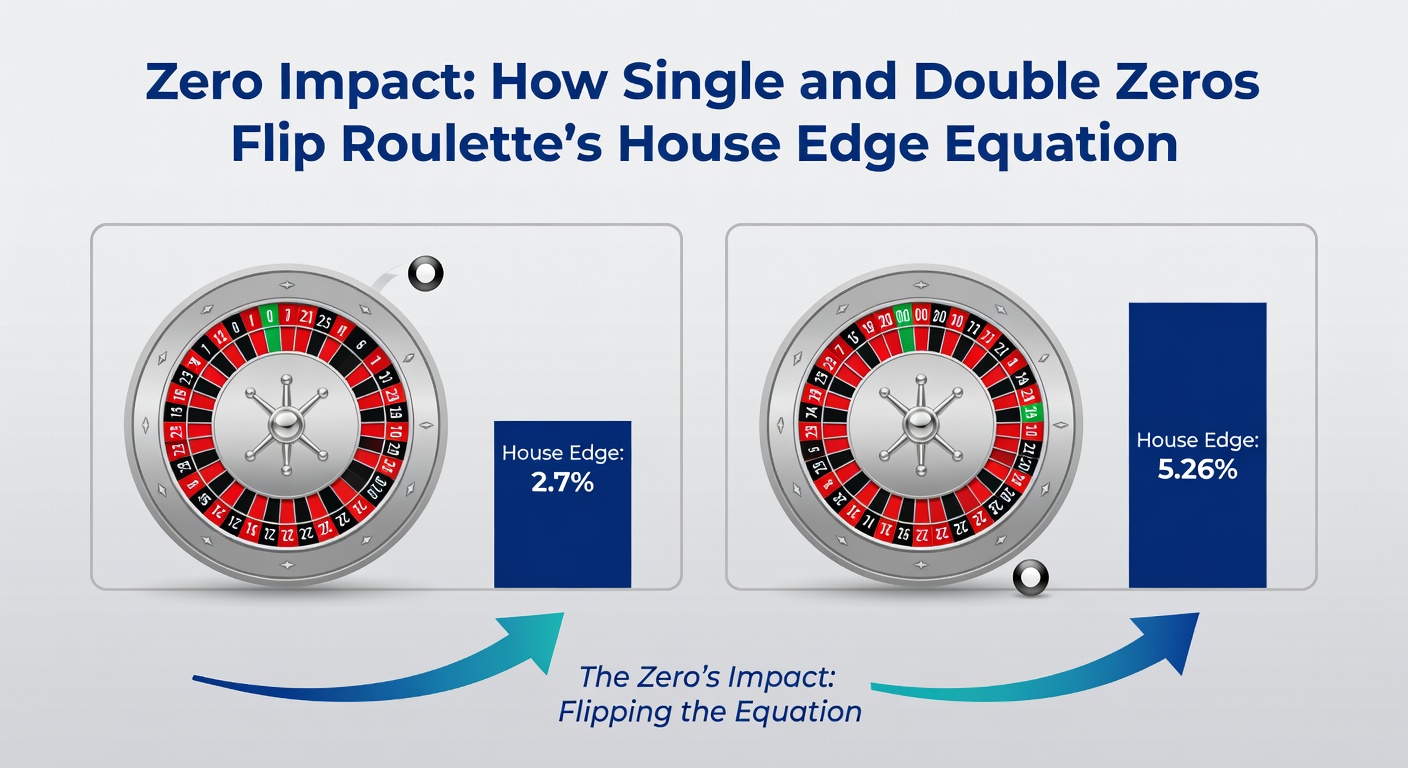
Across the Atlantic, American roulette adds pocket 00, stretching the wheel to 38 slots and doubling the zero threat; even-money bets now face a 1/38 loss probability on zero or double zero, pushing the house edge to 5.26 percent, a near-doubling from European norms that data from U.S. casino audits confirms session after session. This setup, born in the 19th-century hustles of New Orleans, persists because operators prize the extra retention, even as players chase the faster-paced action.
Take one study from gaming analysts who simulated 100,000 spins: double-zero tables extracted 94 percent more edge value than single-zero counterparts on identical bet volumes; straight bets suffer similarly, with 35:1 payouts against 37:1 true odds, widening the gap further. That's where the rubber meets the road for bankroll managers, who adjust unit sizes downward on these wheels to weather the steeper mathematical climb.
Yet casinos blend this with five-number bets covering zero, 00, one, two, and three, offering 6:1 payouts but a whopping 7.89 percent edge, the highest on the board; experts observe how this tempts newcomers, while veterans stick to even-moneys despite the drag.
Math Breakdown: Probabilities and Payouts Side by Side
Numbers tell the story starkly: on single-zero, red hits 18/37 times or roughly 48.65 percent, but pays 1:1, leaving the shortfall as house take; double-zero drops that to 47.37 percent, amplifying losses over volume. Figures reveal column bets follow suit at 2.7 versus 5.26 percent edges, while dozens mirror the pattern precisely.
So, in a 10,000-spin marathon, a $10 even-money wager sequence loses $2,700 expected on European wheels, but $5,260 on American, per calculations from probability models shared by university gaming departments; this disparity compounds with progressive systems, where zeros trigger reset cascades more punishingly on 00 tables.
- Single-zero even-money: 1.35 percent with La Partage/En Prison rules activated.
- Double-zero five-number bet: 7.89 percent edge, highest volatility trap.
- Both: Straight-up edges fixed at payout deficits, unaffected by wheel count alone.
It's noteworthy that online RNG certifications enforce these exact ratios, with auditors verifying random distributions quarterly.
How Zeros Reshape Betting Strategies and Bankrolls
Players adapt by favoring single-zero tables whenever available, scaling units to match edge severity; one case from casino floor logs shows double-zero players quitting sessions 20 percent sooner due to accelerated drawdowns. Fibonacci sequences stretch further on lower-edge wheels, while flat betting endures the zero hits symmetrically.
Turns out, sector slices like Voisins du Zéro encompass the green pocket deliberately, balancing coverage at even-money effective returns minus the shared edge; data indicates those employing announced bets on single-zero floors retain bankrolls 15-20 percent longer than straight-up grinders on double-zero setups.
And as April 2026 unfolds, reports from North American operators highlight a shift toward hybrid online tables blending single-zero rules with American layouts, aiming to lure EU players amid rising cross-border play; this trend, tracked by industry trade groups, underscores how zero configurations dictate market flows.
Special Rules and Variants That Counter the Zero Effect
French roulette deploys En Prison alongside La Partage, locking even-money bets on zero for a re-spin chance, halving edges anew; Canadian casinos, per provincial gaming data, increasingly adopt these to compete, blending them into digital formats. Multi-wheel lightning variants multiply zeros per spin virtually, but cap edges via bonus multipliers, keeping math transparent.
Observers note Australian online platforms favor single-zero with no-commission tweaks on certain bets, nudging edges below 2.7 percent selectively; such innovations, vetted by local regulators, illustrate how operators fine-tune zero impacts without altering core wheels.
Wrapping the Wheel: Key Takeaways on Zero-Driven Edges
Single and double zeros anchor roulette's house edge framework, with European efficiency at 2.7 percent contrasting American heft at 5.26 percent, a divide backed by regulatory stats and spin simulations alike; players who parse these flips extend sessions meaningfully, especially under mitigating rules like La Partage. As trends evolve into April 2026, hybrid wheels and online adaptations signal ongoing refinements, yet the zero's equation remains the game's unyielding constant, shaping every turn with mathematical precision.