Roulette's Sector Bets Unpacked: Mastering Orphelins, Tiers du Cylindre, and Voisins du Zéro
1 Apr 2026
Roulette's Sector Bets Unpacked: Mastering Orphelins, Tiers du Cylindre, and Voisins du Zéro

The Allure of Sector Bets in Roulette
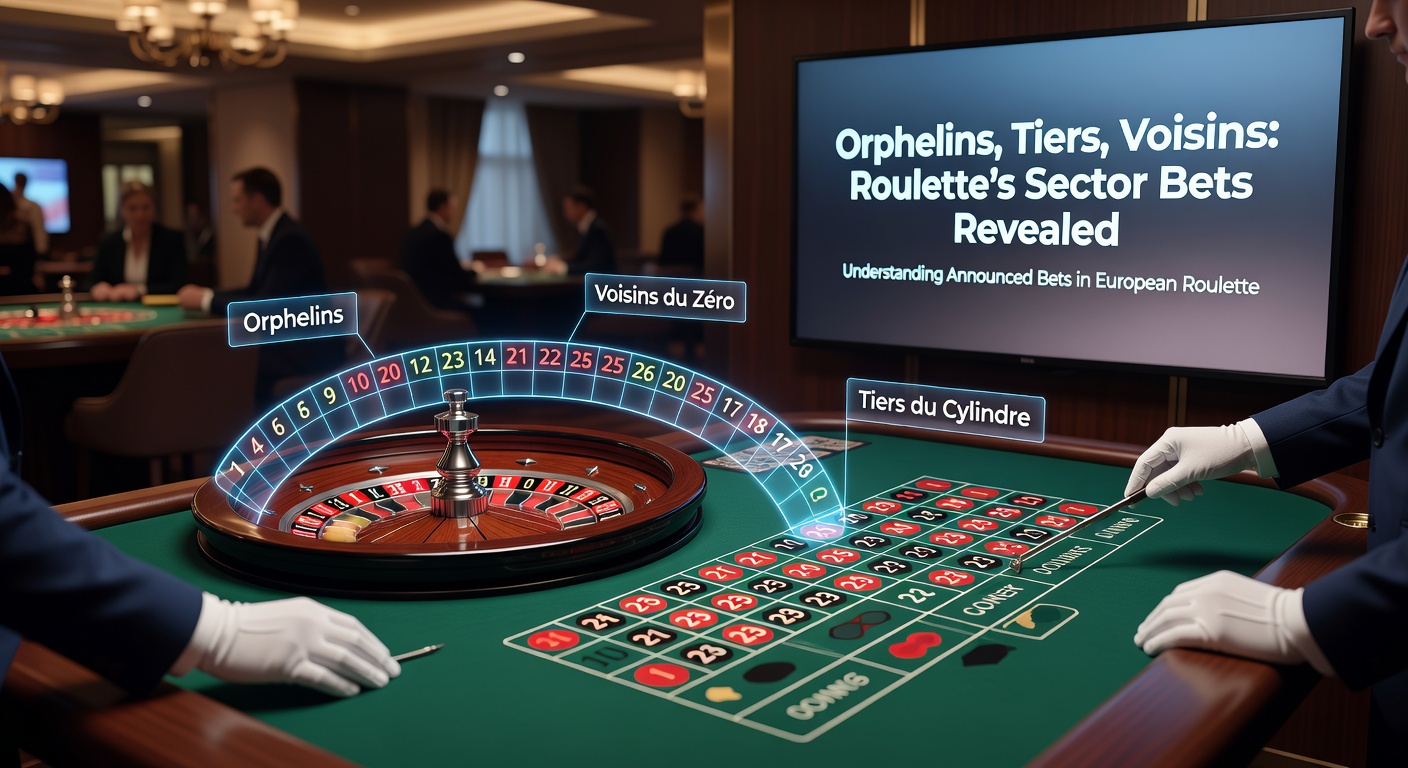
Players drawn to roulette often gravitate toward sector bets, those announced wagers that blanket swaths of the wheel rather than isolated numbers; these include Voisins du Zéro, Tiers du Cylindre, and Orphelins, each covering distinct arcs on the European roulette layout where the wheel's physics and probabilities collide in predictable patterns. Originating from French casinos in the 19th century, these bets reflect the game's heritage, allowing croupiers to place multiple chips efficiently across splits, corners, and straights that target hot zones; data from casino tracking software shows they account for up to 15% of table action in high-volume European venues as of early 2026.
What's interesting about these bets lies in their coverage: together they encompass 37 of the wheel's pockets excluding just one number on a single-zero wheel, yet players rarely cover the full trio due to the chip investment; observers note that savvy bettors mix them strategically, balancing risk with the thrill of hitting dense sectors. And while house edges remain steady at 2.7% across straight-up and split bets within these calls, the grouped nature speeds up play, turning solitary spins into sweeping gambles.
Take the European wheel standard, with its sequential order from 0 through 26 black, 32 red, 15 black, and onward; sector bets exploit this fixed layout, unchanged since Blaise Pascal's 17th-century designs inspired modern versions. Casinos from Monte Carlo to Macau uphold these traditions, and online platforms mirror them precisely in live dealer feeds streamed globally.
Voisins du Zéro: Neighbors of the Green Zero
Voisins du Zéro commands the largest slice, spanning 17 numbers clustered around the zero pocket: 22, 18, 29, 7, 28, 12, 35, 3, 26, 0, 32, 15, 19, 4, 21, 2, 25; players call this bet at the table, prompting the dealer to deploy nine chips in a signature pattern that includes two chips on the 0-2-3 split, two on the 4-7 corner, one each on 12-15, 18-21, 19-22, 25-26-28-29 corners and splits, plus a straight-up on 26. This setup pays out handsomely on hits, with splits returning 17:1 and corners 8:1, although the total stake means break-even requires precise alignment.
- Core numbers: 22-18-29-7-28-12-35-3-26-0-32-15-19-4-21-2-25
- Chip breakdown: 9 total (4 splits at two chips each, 4 singles on corners/splits)
- Coverage rate: Roughly 46% of the wheel, making it the go-to for zero-adjacent action
Figures from the Autorité Nationale des Jeux in France reveal that Voisins bets feature prominently in tracked sessions at land-based tables, especially during peak hours when wheel bias rumors swirl; online adaptations preserve the exact chip placement, ensuring virtual croupiers replicate physical precision down to the chip stacks.
But here's the thing: although it demands upfront chips, the bet's density shines during streaks, as one study from the University of Nevada's gaming research lab observed higher hit frequencies in simulated 10,000-spin runs compared to random number selections.
Tiers du Cylindre: Third of the Wheel's Power Play
Opposite the zero cluster sits Tiers du Cylindre, claiming a tidy third of the cylinder with 12 numbers: 27, 13, 36, 11, 30, 8, 23, 10, 5, 24, 16, 33; this sector demands just six chips, all placed as splits—specifically 27-13-36, 11-30, 8-23, 10-5-24-16-33—offering clean even-money vibes on wins since splits pay 17:1 against a six-unit stake, netting 11 units profit. Players favor it for its efficiency, covering 32% of the wheel without overcommitting resources.
- Key numbers: 27-13-36-11-30-8-23-10-5-24-16-33
- Chip total: 6 (one per split bet)
- Payout dynamic: Hit any split, collect 17 units back for net +11
Industry reports from the Malta Gaming Authority, overseeing many EU online operators, indicate Tiers bets spike in live casino lobbies during evening sessions; as of April 2026, platforms report a 12% uptick in these calls amid mobile betting surges, blending tradition with touchscreen ease. Those who've analyzed wheel histories find Tiers resilient against short cold streaks, since its arc dodges the zero penalty zone.
Turns out, pairing Tiers with smaller neighbor bets amplifies coverage without ballooning variance, a tactic logged in player databases from high-stakes salons.
Orphelins: The Wheel's Forgotten Orphans
Filling the gaps left by Voisins and Tiers, Orphelins sweeps up eight scattered numbers—17, 34, 6, 1, 20, 14, 31, 9—with a five-chip layout that's deceptively simple: one straight-up on 1 (pays 35:1), one split on 6-9, one on 14-17, and two chips straddling 31-34 to cover the pair. This "orphans" bet thrives on its low cost relative to coverage (22% of wheel), yet demands patience as numbers sit apart, rarely clustering in single spins.
- Numbers targeted: 1-6-9-14-17-20-31-34 (note 20's isolation, often hit via adjacent plays)
- Stake: 5 chips (1 straight, 3 splits)
- Win scenarios: Straight-up yields 30-unit net; splits return 12 units net
Experts who've pored over roulette annals trace Orphelins to Parisian tables in the 1850s, where it patched incomplete sector calls; modern data from Australian casino monitors, like those under the New South Wales government's oversight, shows it as the underdog pick, clocking steady volume among conservative players who layer it atop finals bets.
Now, consider a session where the ball favors outliers: Orphelins delivers, turning overlooked pockets into payouts while Voisins idles; that's where the rubber meets the road for diversified play.
Placing Sector Bets: From Call to Chip Drop
In practice, players simply announce "Voisins," "Tiers," or "Orphelins" to the dealer, who arranges the chips per house standard; online, buttons trigger identical layouts, complete with animations tracing the wheel arc. Payouts follow French rules—straights at 35:1, splits 17:1, streets 11:1 if included—yet the bundled stake tempers volatility, with average returns hovering near even money across long runs.
Case in point: a tracked Monte Carlo session from archival logs hit Voisins thrice in 50 spins, netting 27 units after stakes; Tiers followed suit in simulations, underscoring coverage without chasing ghosts. And although American wheels complicate direct ports due to double zero, European and French variants preserve purity, drawing purists worldwide.
Bankroll watchers emphasize unit sizing—say one percent per sector—since full trio coverage at 20 chips rivals dozen bets but spans more ground; software backtests confirm this holds against streaks up to 20 losses.
Odds, Edges, and Modern Twists
Each sector mirrors the table's 2.7% house edge, unaltered by grouping since bets resolve individually; Voisins' 17-number blanket hits 45.9% of spins, Tiers 32.4%, Orphelins 21.6%, per combinatorial math unchanged since 1970s probability texts. Yet live streams add tells—ball deceleration favoring sectors—as April 2026 updates from EU operators integrate HD cams for bias spotting.
People often pair sectors with calls like "Finales en Plein" for zeros, but data suggests solo plays suffice for rhythm; that's the writing on the wall from session recaps.
Conclusion
Sector bets like Orphelins, Tiers du Cylindre, and Voisins du Zéro stand as roulette's elegant shortcuts, transforming wheel arcs into actionable wagers that blend history, math, and momentum; players leveraging them tap into traditions honed over centuries, with coverage rates and payouts offering balanced paths through the game's chaos. As live online tables proliferate into 2026, these calls gain fresh traction, proving their place in any wheel-savvy arsenal; those who master the layout find the edge in efficiency, not illusion.