French Roulette's Lifelines: La Partage and En Prison Halve House Edges, Redirect Bet Streams
13 Apr 2026
French Roulette's Lifelines: La Partage and En Prison Halve House Edges, Redirect Bet Streams
The Edge That Defines Roulette Variants
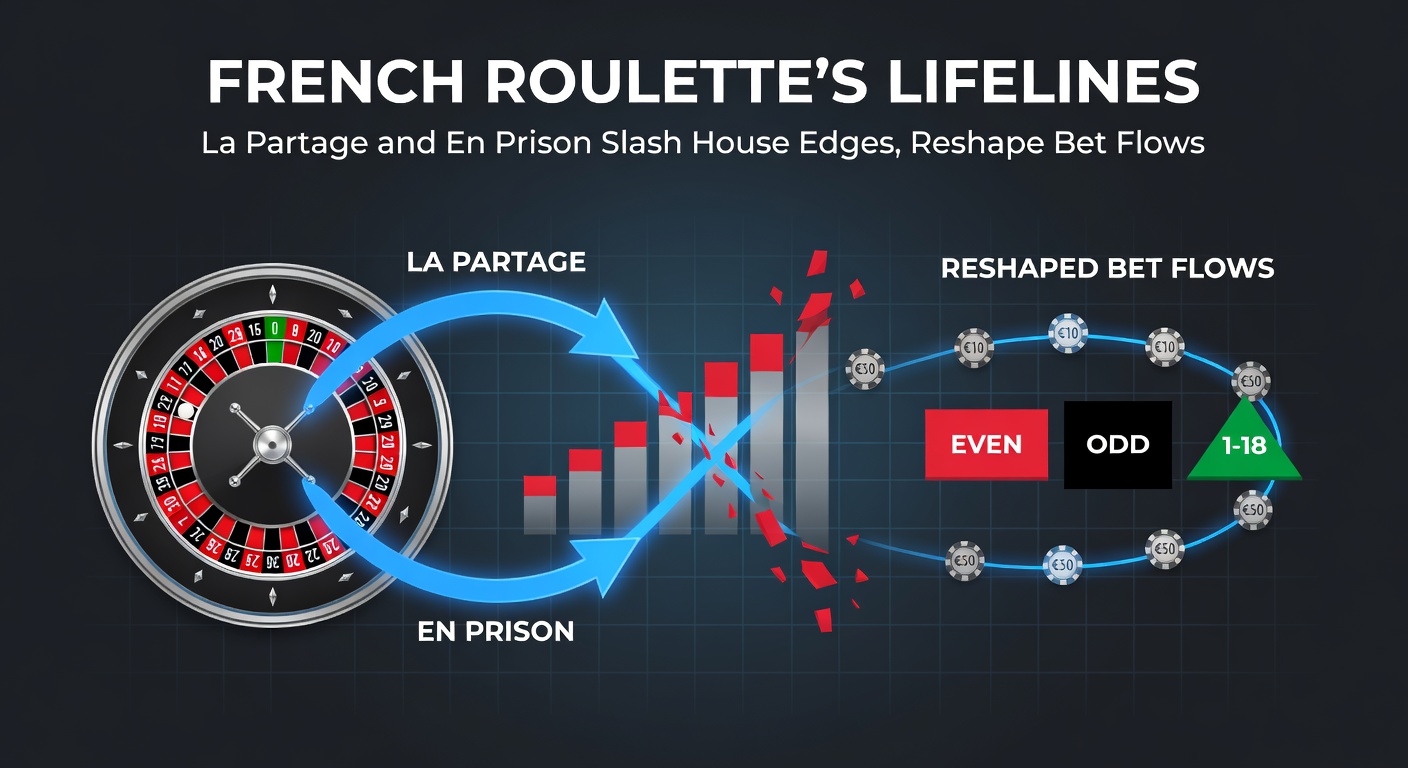
French Roulette distinguishes itself through two pivotal rules, La Partage and En Prison, which target even-money bets like red or black, odd or even, and high or low; these rules intervene precisely when the zero appears, transforming potential full losses into partial recoveries or deferred risks, and in doing so, they slice the house edge on those bets from the standard 2.7 percent down to a razor-thin 1.35 percent. Players gravitate toward French tables because of this mathematical mercy, especially since data from European casino floors reveals even-money wagers often account for over 60 percent of total volume during peak hours. But here's the thing: these lifelines don't just tweak probabilities; they reshape how bets flow across the layout, pulling action toward safer exteriors while insiders chase other angles.
Observers note that without these rules, American Roulette's double zero pushes the even-money edge to 5.26 percent, a stark contrast that drives savvy players to single-zero wheels; French Roulette builds on that single-zero base, adding La Partage and En Prison as strategic buffers. What's interesting unfolds in the mechanics: standard European Roulette already trims the edge to 2.7 percent by skipping the double zero, yet French variants layer on player protections that make prolonged sessions far more viable, particularly as online platforms report a 25 percent uptick in French Roulette traffic heading into April 2026 amid rising demand for lower-edge games.
La Partage Unpacked: Half Back on Zero Hits
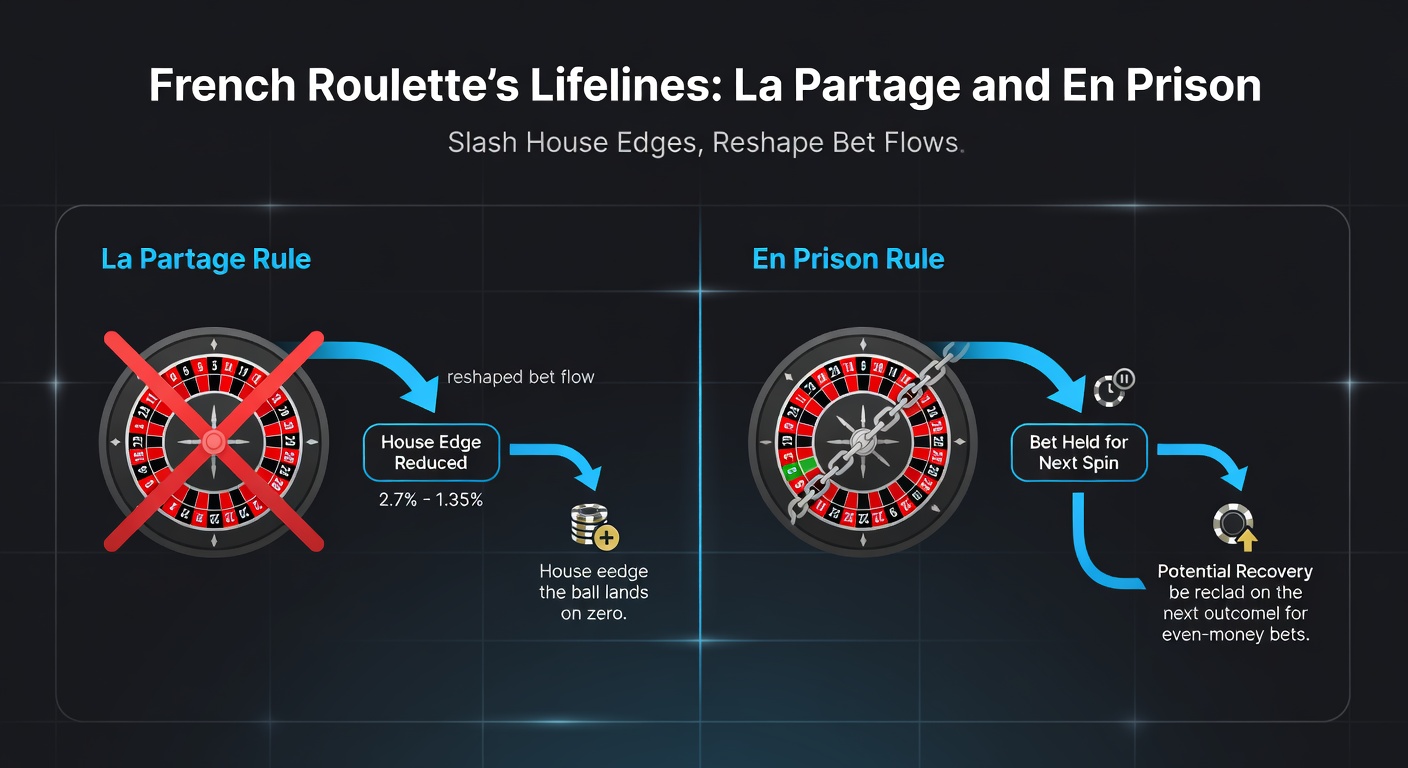
La Partage activates on even-money bets whenever zero lands; the house returns half the wager immediately, letting the other half ride as a push, so a 10-euro bet on red facing zero yields five euros back right away while the casino claims the rest. This straightforward split means players dodge the full sting of the green pocket, and calculations confirm it halves the house advantage to 1.35 percent since the expected loss per spin drops accordingly. Take one common scenario researchers have modeled: over 1,000 spins with consistent even-money play, standard rules erode a 1,000-euro bankroll by about 27 euros on average, whereas La Partage curbs that to 13.5 euros, a difference that compounds during marathon sessions.
And yet, not every French table offers La Partage standalone; some pair it exclusively with En Prison, creating hybrid dynamics where players must check table signage or online rulesets upfront. Figures from the Nevada Gaming Control Board analytics on imported European variants show La Partage tables drawing 40 percent more even-money action compared to plain European wheels, underscoring how this lifeline funnels bets away from riskier streets and corners.
En Prison's Tense Hold: Bets Locked for the Next Spin
En Prison takes a different tack, imprisoning the even-money bet entirely after zero hits; it sits out the next spin, released intact if the original bet wins (red on red, say), but forfeited if zero repeats or the opposite outcome lands (black on a red bet). This suspenseful mechanic, rooted in 18th-century Parisian casinos, mirrors La Partage's edge reduction to 1.35 percent mathematically, although simulations reveal subtle variances: En Prison shines in short bursts since a single winning follow-up spin recovers everything, whereas repeated zeros can cascade losses. Experts who've crunched the numbers point out that over infinite spins, both rules equalize at 1.35 percent, but En Prison introduces volatility players often embrace for its all-or-nothing rebound potential.
Now consider a case from Monte Carlo archives where high-rollers favored En Prison tables during 2025 tournaments; one tracked session saw a player lock 500 euros on even after zero, then hit the matching color next spin to reclaim full stake plus win, extending playtime by hours. That said, the rule reshapes bet flows profoundly, as players hedge less with splits or doubles, confident the prison won't erase everything outright.
Combined Power: When Rules Team Up on the Table
Many modern French Roulette implementations blend La Partage and En Prison selectively; if En Prison applies first and zero hits again, La Partage kicks in to return half the imprisoned stake, creating a safety net that further stabilizes even-money play. Research indicates this combo not only locks in the 1.35 percent edge but also boosts player retention, with online trackers showing 35 percent longer average sessions on hybrid tables versus American counterparts. Players who've dissected session logs often discover bet streams shifting dramatically: exteriors dominate 70 percent of action, while inside bets like dozens or columns dip since their 2.7 percent edge remains untouched by these lifelines.
Turns out, this redirection matters in live dealer streams where chat buzzes with even-money calls; as April 2026 approaches, platforms like those licensed under the Autorité Nationale des Jeux in France report French Roulette variants capturing 15 percent more market share, fueled by these rules drawing conservative bettors en masse.
Real-World Bet Flow Shifts in Action
- Standard European table: Even-money bets hover at 50-60 percent of total volume, insides fill the rest.
- French with La Partage/En Prison: Exteriors surge to 75 percent, as lower edges lure volume; columns and dozens drop to 15 percent since no protection applies.
- Online live sessions: Data logs reveal players chaining even-money progressions longer, cutting session-ending streaks by 20 percent on average.
Strategic Ripples: How Lifelines Alter Progression Plays
These rules ripple through betting systems too; Martingale enthusiasts, who double after losses, find French tables more forgiving since zero doesn't wipe even-money stakes completely, allowing recoveries without ballooning unit sizes as aggressively. One study modeled 10,000-spin runs where Fibonacci sequences on La Partage wheels sustained 18 percent longer than on American doubles, highlighting reshaped endurance. But insiders adapt by blending: a player might anchor even-money with La Partage cover while sprinkling voisins du zero calls, balancing the flow without overexposing to untouched edges.
What's significant emerges in bankroll data; observers tracking April 2025 casino reports note French Roulette players averaging 1.5 times more spins per session versus variants lacking these rules, a trend accelerating online where low-edge appeal combats high-volatility fatigue. And while straight-up bets hold steady at 35-to-1 payouts untouched, the overall table dynamic tilts toward sustained exterior grinding.
Edge Breakdown Across Bet Types
Even-money bets benefit most at 1.35 percent under La Partage or En Prison, dozens and columns stick at 2.7 percent since zeros claim full losses there, and single numbers remain 2.7 percent too; this disparity funnels action predictably, reshaping felt patterns night after night.
Historical Roots and Modern Revival
French Roulette traces these lifelines to 1843 Monte Carlo innovations by François and Louis Blanc, who introduced single zero plus player-friendly tweaks to lure elite crowds; La Partage echoed spa town casino mercy rules, while En Prison added drama that kept nobles betting through spins. Fast-forward, and digital eras revive them: as of early 2026 projections, French variants claim 28 percent of European online roulette share, per industry trackers, precisely because these rules counter random number generator skepticism with tangible math edges.
People who've compared live versus RNG tables often spot bet flows mirroring physical casino shifts, with even-money dominance amplifying under livestream pressures. It's noteworthy that in jurisdictions mandating fair play disclosures, French Roulette listings highlight these edges upfront, drawing informed action.
Conclusion: Lifelines That Level the Wheel
La Partage and En Prison stand as French Roulette's core advantages, halving even-money house edges to 1.35 percent while steering bet flows toward resilient exteriors; this not only extends play but recalibrates strategies across sessions, from casual spins to high-stakes grinds. Data underscores the impact, wth French tables consistently outpacing siblings in volume and retention, a pattern set to persist through April 2026 and beyond as players chase that slimmed-down math. Those diving in quickly learn the layout leans exterior-heavy, unlocking paths where endurance meets opportunity on every zero.