20 Jul 2026
UK Gambling Commission Releases Third Annual GSGB Report with Comparable Trend Data

The UK Gambling Commission has published its third annual report from the Gambling Survey for Great Britain, and this release delivers the first set of robust multi-year insights into how adults participate in gambling activities along with their behaviours, attitudes, and experiences of harm. teh survey covers comparable trend data spanning 2023 through 2025, drawing on responses from more than 20,000 adults across Great Britain.
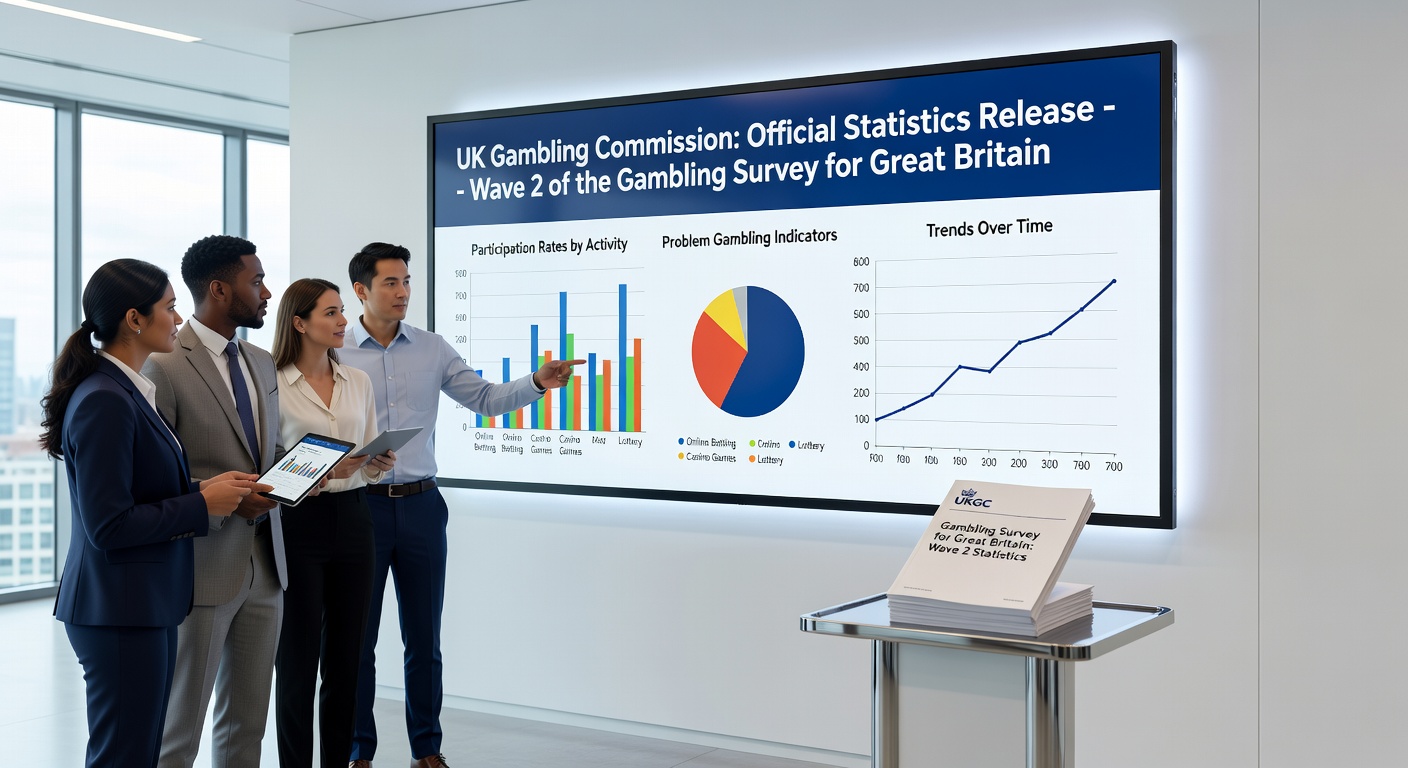
Data collection for the latest wave took place between January 2025 and January 2026, which allows analysts to track changes over successive years rather than isolated snapshots. Participation stood at 47 percent of adults who reported gambling in the past four weeks, while the rate of problem gambling remained steady at 2.4 percent. These figures come directly from the official statistics published alongside the report.
Survey Design and Data Collection Approach
The Gambling Survey for Great Britain employs a large-scale methodology that produces reliable year-on-year comparisons. Over 20,000 adults completed detailed questionnaires, and the sample size supports breakdowns by demographic groups as well as by different gambling products and channels. Researchers designed the instrument to capture both frequency of participation and self-reported impacts, which creates a consistent framework for measuring shifts across the three-year period.
Because the same core questions appear in each wave, analysts can now identify patterns that single-year surveys could not reveal. The approach includes modules on attitudes toward gambling, awareness of support services, and experiences of financial or emotional harm, all of which feed into the annual report's trend tables.
Key Participation Findings for 2025-2026
Forty-seven percent of adults in Great Britain indicated they had taken part in at least one gambling activity during the four weeks preceding their interview. This headline figure encompasses lotteries, sports betting, casino games, and online slots among other products. The report presents the number alongside earlier waves so readers can see whether overall engagement has moved upward, downward, or remained level since 2023.
Breakdowns by age and region appear in the detailed tables, yet the aggregate participation rate provides the clearest headline comparison. Observers note that the stability of this percentage across multiple years supplies a baseline against which future regulatory changes can be measured.
Problem Gambling Rate Holds Steady at 2.4 Percent
The proportion of adults classified as problem gamblers stayed at 2.4 percent, matching the rate recorded in previous waves of the same survey. Classification relies on a validated screening instrument embedded in the questionnaire, and the consistent result suggests that the underlying prevalence has not shifted materially between 2023 and 2025.
The report also supplies figures on moderate-risk gambling and low-risk gambling, which together give a fuller picture of the continuum of gambling-related harm. Because the methodology remained unchanged, those who track these statistics can compare the distribution across categories without adjusting for differences in survey design.
Attitudes, Behaviours, and Reported Harms
Beyond headline percentages, the survey explores how people view gambling and what consequences they experience. Questions cover perceived fairness of games, exposure to marketing, and decisions about setting limits or seeking help. Responses reveal that a substantial share of participants hold neutral or positive views toward gambling as a leisure activity, while a smaller segment reports negative effects on finances, relationships, or mental health.
The multi-year dataset allows researchers to examine whether attitudes have hardened or softened in tandem with participation levels. For instance, the proportion of respondents who recall seeing responsible-gambling messages can be tracked across waves, which offers insight into the reach of industry and regulatory campaigns.
First Robust Multi-Year Perspective
Earlier iterations of the survey supplied valuable single-year snapshots, yet this third annual report marks the point at which comparable trend data become available. Analysts can now distinguish between short-term fluctuations and longer-term movements in participation or harm indicators. The Gambling Survey for Great Britain (Annual Report 2025): Official statistics document contains the full set of tables that support these comparisons.
Stakeholders in regulation, treatment services, and industry compliance receive a clearer evidence base for planning. The stability observed in both participation and problem-gambling rates supplies a reference point as new measures, such as affordability checks or marketing restrictions, take effect in the months ahead.
Looking Ahead to Mid-2026
By July 2026 the next wave of data collection will already be under way, and the four-year trend series will begin to take shape. Policymakers and researchers will examine whether the 47 percent participation rate and 2.4 percent problem-gambling rate continue to hold or whether external factors begin to register in the statistics. The current report therefore functions as both a summary of recent findings and a foundation for the comparisons that will follow.
Conclusion
The third annual Gambling Survey for Great Britain report supplies the first sustained view of adult gambling behaviour across multiple years. With more than 20,000 respondents and consistent methodology, the data show a 47 percent participation rate alongside a steady 2.4 percent problem-gambling prevalence. These figures, together with the accompanying detail on attitudes and harms, give regulators, treatment providers, and the wider public a factual baseline for monitoring developments through 2026 and beyond.